B. toys Blog — Play Ideas, Learning Guides & Parenting Inspiration
Play, Learn & Grow Together
Explore expert tips, creative play ideas, and helpful guides for parents.
Read Latest ArticlesIndoor Play & Movement
Keep little bodies active and minds engaged with simple indoor setups.
Explore Active ToysNurturing Musicality in Toddlers
How rhythm and interactive sound foster early cognitive growth.
Discover Musical ToysThe Value of Tactile Wooden Toys
Why open-ended wooden play supports sensory development.
View Wooden ToysTop 10 Toy DJ Mixers for Kids and Wholesale Buyers
Table of Contents
- What Toy DJ Mixers Are and How They Work
- Key Safety and Age-Appropriate Features for Children
- Top 10 Toy DJ Mixers: Features, Functions, and Best Uses
- How to Compare Sound, Durability, Controls, and Accessories
- Wholesale Buying Factors: Pricing, Orders, Customization, and Supplymemento
- FAQS
- Conclusion
- Related Posts
Choosing a Toy DJ Mixer for children or wholesale distribution requires more than bright buttons and loud sounds. Buyers must examine age suitability, build quality, learning value, volume control, and replacement support. A mixer may look exciting on a screen, yet feel fragile after one busy afternoon. Small knobs, clear labels, and responsive pads often matter more than decorative lights.
Toy-industry educator Daniel Harper says, “The best children’s mixer turns simple play into confident, creative listening.” That principle guides this review of the Top 10 Toy DJ Mixers for Kids and Wholesale Buyers. Each model is considered through practical use, not only product photographs. We look at grip comfort, button spacing, microphone performance, sound effects, battery access, and packaging efficiency. Wholesale buyers also need consistent supply, sensible minimum order quantities, and dependable quality checks. A low unit price can become expensive when returns increase.
Some products will suit family bedrooms. Others may work better in classrooms, activity centers, or seasonal retail displays. Expectations should stay realistic. No Toy DJ Mixer replaces a professional audio console, and some models may have limited sound depth. That limitation is not always a weakness for young users. Simple controls can reduce frustration and encourage experimentation. Still, testing several units would improve every buying decision. This guide may not capture every regional preference, but it offers a careful starting point for safer, more informed selection. Noise levels, supervision, and durable materials deserve attention before any bulk purchase.
What Toy DJ Mixers Are and How They Work
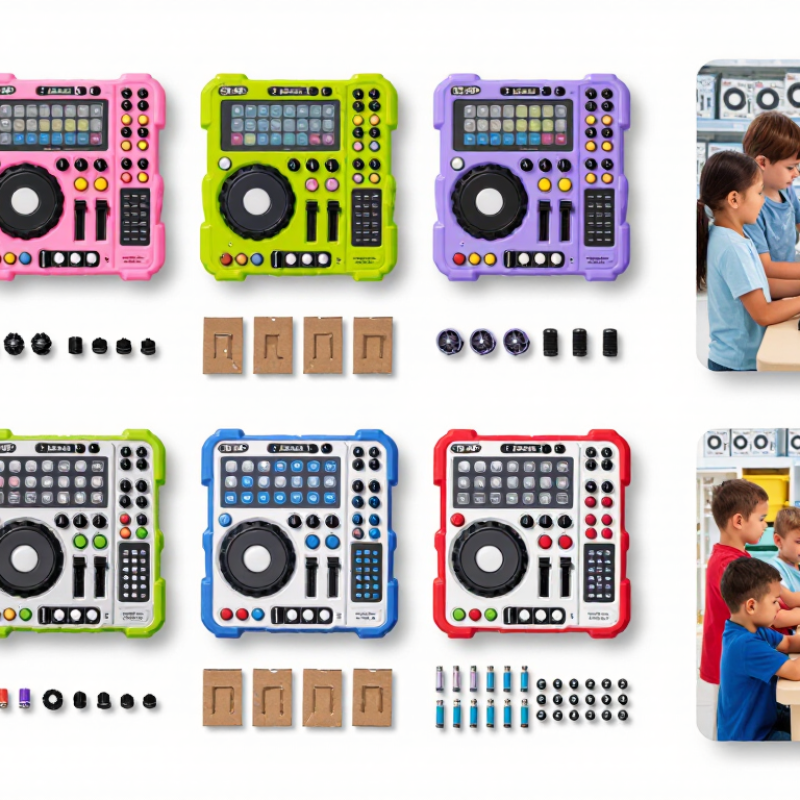
Toy DJ mixers are compact audio playsets that let children explore music through simple controls. They usually include two sound pads, a small speaker, volume buttons, light effects, and a crossfader. Some models also offer a microphone or built-in rhythm sounds. They do not copy professional equipment perfectly. That limitation can be useful.
Inside, the mixer sends selected sounds through a small electronic audio circuit. Pressing a pad triggers a stored beat, voice effect, or short melody. Turning a knob changes volume, tone, or playback speed, depending on the design. Moving the crossfader shifts sound from one channel to another. Children can hear the change immediately. That direct response makes cause and effect easier to understand.
For parents and wholesale buyers, practical testing matters more than colorful packaging. Check button size, speaker clarity, battery access, cable strength, and surface stability. A mixer should feel responsive without requiring excessive force. I have found that overly sensitive controls can frustrate younger users, although older children may enjoy the extra challenge. Safe sound levels and rounded edges also deserve attention. Some products advertise many functions, but children may use only three regularly. A clear layout often creates better play than a crowded control panel. Wholesale evaluation should include repeated button tests, sample audio checks, and age-appropriate usability reviews. No toy mixer is perfect. That is worth remembering.
Key Safety and Age-Appropriate Features for Children
Top 10 Toy DJ Mixers for Kids and Wholesale Buyers
Safety should guide every choice when comparing toy DJ mixers for children. A suitable model needs rounded edges, smooth controls, and a stable base that will not slide across a table. Small knobs or removable caps deserve careful inspection because young children may place loose parts in their mouths. Always match the product with its stated age range, not a child’s musical interest alone.
Volume control matters more than flashy effects. A built-in sound limiter can help protect young ears during indoor play, while large buttons reduce frustration for smaller hands. Battery compartments should close securely with screws, and charging ports need clear instructions. Avoid exposed wires, sharp seams, strong odors, or poorly printed warnings. These details often reveal weak quality control.
For wholesale buyers, request safety test reports, material information, user instructions, and consistent batch samples before placing a large order. Check whether the supplier explains testing for the intended market. Ask how defects are tracked and handled. I once focused too much on attractive lights and overlooked a loose slider; that mistake changed my inspection checklist. Children need fun, but they also need predictable design. Adult supervision remains sensible, especially around cables and shared equipment. Some children may still find bright lights or loud sounds uncomfortable. A quieter setting helps.
| No. | Generic Product Type | Recommended Age | Core DJ Features | Safety and Child-Friendly Features | Power Source | Approx. Size (L × W × H) |
Approx. Net Weight | Typical Wholesale MOQ | Indicative Wholesale Range (USD/Unit) |
|---|---|---|---|---|---|---|---|---|---|
| 1 | Compact Beginner DJ Mixer | 3–6 years | Two-channel volume control, built-in demo tracks, simple light effects, microphone input | Rounded edges, oversized buttons, low-volume speaker output, battery compartment with screw-secured cover | 3 × AA batteries | 24 × 15 × 7 cm | 0.55 kg | 500 units | $7.50–$10.50 |
| 2 | Dual-Deck Music Play Mixer | 4–8 years | Two playback decks, crossfader, sound-effect buttons, tempo-style control | Large controls for small hands, stable non-slip base, automatic inactivity shut-off | USB-C rechargeable battery | 31 × 19 × 7 cm | 0.82 kg | 300 units | $13.00–$18.00 |
| 3 | Mini Mixer with Wired Microphone | 4–8 years | Voice amplification, echo control, music playback, LED response lights | Low-voltage operation, microphone cable with strain relief, enclosed speaker grille, rounded microphone body | 4 × AA batteries | 27 × 16 × 8 cm | 0.68 kg | 500 units | $9.00–$12.50 |
| 4 | USB-C Rechargeable DJ Console | 6–10 years | USB audio playback, two microphone inputs, crossfader, record-style controls, rhythm pads | Protected charging port, charge-status indicator, volume limit, anti-skid feet | Rechargeable lithium battery | 35 × 22 × 8 cm | 1.05 kg | 200 units | $18.00–$26.00 |
| 5 | Educational Beat-Making Mixer | 6–10 years | Eight beat pads, simple loop function, preset instruments, beginner rhythm lessons | Color-coded controls, quiet-touch buttons, rounded corners, no detachable small accessories | 3 × AA batteries | 30 × 20 × 6 cm | 0.78 kg | 300 units | $14.00–$20.00 |
| 6 | Bluetooth-Compatible Toy Mixer | 8–12 years | Wireless audio playback, two-channel mixing, sound effects, headphone output | Parental volume guidance, covered electronic components, insulated controls, stable weighted base | USB-C rechargeable battery | 34 × 21 × 7 cm | 0.95 kg | 200 units | $20.00–$29.00 |
| 7 | Portable Party DJ Mixer | 6–10 years | Built-in speaker, flashing beat lights, music playback, microphone input, carry handle | Light diffusion covers, rounded carry handle, protected speaker grille, automatic power-saving mode | Rechargeable lithium battery | 29 × 18 × 18 cm | 1.25 kg | 200 units | $22.00–$32.00 |
| 8 | Two-Microphone Family DJ Set | 6–10 years | Two wired microphones, vocal effects, playback controls, dual-user mixing | Child-sized microphones, rounded plug ends, cable storage area, separate microphone volume controls | 6 × AA batteries | 32 × 20 × 9 cm | 1.10 kg | 300 units | $17.00–$24.00 |
| 9 | Screen-Assisted Kids DJ Console | 8–12 years | Small color display, animated mixing guides, loop controls, sound library, beat pads | No open internet access, covered battery compartment, large icons, screen brightness control | 4 × AA batteries | 36 × 23 × 9 cm | 1.20 kg | 200 units | $25.00–$36.00 |
| 10 | Modular STEM Audio Mixer Kit | 8–12 years | Modular sound blocks, input mixing, basic audio experiments, rhythm sequencer, guided activities | Low-voltage circuitry, enclosed battery holder, secured modules, illustrated safety instructions | 3 × AA batteries | 33 × 24 × 8 cm | 1.35 kg | 100 units | $28.00–$42.00 |
Top 10 Toy DJ Mixers: Features, Functions, and Best Uses
Toy DJ mixers for children should balance play value, clear controls, and dependable construction.
The best ten designs usually include a two-channel mixer, a mini turntable, a microphone mixer, a sampler pad, a light-up console, a headphone trainer, a battery-powered travel unit, a recording mixer, a beginner scratch deck, and a classroom-friendly model.
Each serves a different purpose. Two-channel units teach volume blending. Sampler pads build rhythm skills. Scratch decks encourage hand coordination. Microphone mixers support pretend performances and storytelling. Simple knobs work better than crowded panels. Children need visible labels and gentle resistance.
Sound quality still matters, even for toys. Look for adjustable volume limits, protected cable ports, stable rubber feet, and rounded edges. Some models add tempo controls, sound effects, or short recording functions. These features are enjoyable, but they should not overwhelm basic mixing practice. I have found that younger users learn faster when one function responds clearly.
Wholesale buyers should check battery access, packaging strength, age guidance, and replacement-part availability. Request safety documentation and sample units before placing large orders. A bright display may attract attention, yet it can drain batteries quickly. That detail is easy to miss. Durability testing should include repeated knob turning and frequent plug removal. Not every attractive mixer survives classroom handling, so product claims deserve careful checking.
How to Compare Sound, Durability, Controls, and Accessories
Choosing among the top 10 toy DJ mixers requires more than counting buttons.
In hands-on comparisons, clear sound matters most. Voices and rhythm should remain recognizable at moderate volume. Avoid models with harsh distortion or sudden volume jumps. Small speakers may sound thin, but balanced output still improves play value.
Durability shows through practical details. Check the housing, knobs, sliders, cable connections, and battery cover. Sturdy plastic should resist repeated handling without feeling dangerously sharp. Controls need enough spacing for small fingers. Oversized buttons are easier to understand, while responsive sliders encourage creative mixing. I once favored a mixer with many controls, but children used only four of them. More features are not always better.
Accessories can change the wholesale calculation. Look for microphones, cables, headphones, stands, stickers, or storage solutions that match the mixer’s design. Test whether included accessories feel useful or merely decorative. For bulk purchasing, request samples before approving a large order. Compare packaging strength, instruction clarity, replacement-part availability, and consistent quality between samples. Age labeling and safety documentation deserve careful review. They are easy to overlook. A return rate can erase an attractive unit price. For younger users, simple controls may outperform advanced effects. For older children, recording functions and adjustable sound effects may provide longer engagement. Some evaluations remain subjective, especially when testing excitement and learning value. That uncertainty should be recorded, not hidden.
Wholesale Buying Factors: Pricing, Orders, Customization, and Supplymemento
For wholesale buyers comparing toy DJ mixers, pricing should be judged beyond the factory quote. Circana reported that United States toy sales fell 8% in 2023, reaching about $28.6 billion. That pressure makes landed cost important. Freight, packaging, testing, spare parts, and import duties can change a seemingly cheap unit. Request tiered pricing for 100, 500, and 1,000 pieces. Check the sample before accepting the lowest offer.
Order terms need practical detail. Ask about minimum order quantities, production time, carton size, payment stages, and defect allowances. A small first order reduces inventory risk, but it may increase unit cost.
Buyers should also confirm whether buttons, lights, sounds, and batteries are included. Grand View Research estimates continued growth in the global toys market, yet growth does not guarantee easy resale. Retailers still need clear age labeling and durable controls.
Customization can include colors, printed boxes, sound effects, manuals, and private packaging. Keep the first design simple. Extra features often create delays and inconsistent quality. Supplymemento, or supply momentum, depends on reliable components and repeatable assembly. Request a production sample, inspection photos, and a written replacement policy. I would also test ten units, not one. One perfect sample can hide a disappointing batch. A clear reorder schedule protects cash flow better than optimistic promises.
FAQS
It is a compact music playset for children. It may include sound pads, volume buttons, lights, and a crossfader. Some models include a microphone or built-in rhythms. It is not professional equipment.
Pressing a pad activates a stored beat, melody, or voice effect. Turning a knob may change volume, tone, or speed. The crossfader moves sound between two channels. Children hear changes immediately.
Look for rounded edges, smooth controls, and a stable base. Small removable parts need careful inspection. Battery compartments should close securely with screws. Avoid sharp seams, exposed wires, and strong odors. Quiet play is sometimes better.
Loud or distorted sound may make indoor play uncomfortable. A sound limiter can help protect young ears. Test the mixer at moderate volume. Avoid sudden volume jumps. The loudest setting is not always the best setting.
Play voices and rhythms at moderate volume. They should remain clear and recognizable. Small speakers may sound thin, but balanced output still helps. Listen for harsh distortion. My judgment may differ from another buyer’s.
Check the housing, knobs, sliders, cables, and battery cover. Press buttons repeatedly without excessive force. Controls should respond without feeling loose. The surface should not slide across a table. A loose slider can become a costly mistake.
Not always. Large buttons and simple layouts often suit younger children. Older children may enjoy adjustable effects or recording functions. Too many controls can create confusion. Children may regularly use only four features.
Request samples, safety documents, material information, and clear instructions. Compare packaging strength and sample consistency. Check accessory usefulness, replacement parts, and age labeling. Ask how defects are tracked and handled. A low unit price may hide higher return costs.
Conclusion
A Toy DJ Mixer is a child-friendly audio play device that introduces young users to mixing through simple controls such as volume sliders, sound pads, beat buttons, scratch effects, and microphone inputs. This guide explains how these mixers work and highlights age-appropriate features, including rounded edges, secure battery compartments, manageable sound levels, durable materials, and easy-to-use layouts. The focus is on safe, creative entertainment that supports rhythm, listening, and confidence.
The top 10 Toy DJ Mixer options are compared by sound quality, control response, durability, included accessories, portability, and the types of play they support. The guide also helps parents, educators, retailers, and wholesale buyers evaluate product value, packaging, order quantities, pricing structure, customization possibilities, lead times, and supply reliability. By comparing these practical factors, buyers can select suitable products for individual children, classrooms, gift programs, or larger retail orders while balancing quality, safety, and budget.

Blog Tags: