B. toys Blog — Play Ideas, Learning Guides & Parenting Inspiration
Play, Learn & Grow Together
Explore expert tips, creative play ideas, and helpful guides for parents.
Read Latest ArticlesIndoor Play & Movement
Keep little bodies active and minds engaged with simple indoor setups.
Explore Active ToysNurturing Musicality in Toddlers
How rhythm and interactive sound foster early cognitive growth.
Discover Musical ToysThe Value of Tactile Wooden Toys
Why open-ended wooden play supports sensory development.
View Wooden ToysHow to Source Preschool Learning Toys for Global Buyers?
Table of Contents
- Define Buyer Requirements and Preschool Toy Categories
- Evaluate Safety, Quality, and Age-Appropriate Learning Features
- Identify Reliable Toy Manufacturers and Verify Their Credentials
- Compare Pricing, Minimum Orders, Sampling, and Production Capacity
- Manage Compliance, Logistics, Importing, and Long-Term Supply Chains
- FAQS
- Conclusion
- Related Posts
Sourcing Preschool Learning Toys for global buyers requires more than attractive colors, low prices, and a promising catalog. Buyers must connect each product with a child’s real learning needs. A wooden counting board should have smooth edges, clear numbers, and pieces large enough for safe handling. A puzzle should challenge young minds without creating unnecessary frustration. Small details matter.
Developmental psychologist David Elkind wrote, “Play is not a luxury. Play is a necessity.” This principle should guide every purchasing decision. Preschool Learning Toys should encourage exploration, language, movement, problem-solving, and social interaction. They should not merely fill shelves. Experienced buyers usually request product samples, age recommendations, material declarations, safety test reports, and factory quality procedures before confirming an order. However, documents alone do not guarantee dependable products. A polished catalog can still hide inconsistent paint, weak packaging, or unclear instructions.
Global sourcing also requires careful attention to destination markets. Safety expectations, labeling rules, electrical requirements, and cultural preferences can differ widely. Buyers should check recognized standards and obtain professional compliance advice when necessary. Supplier audits, batch inspections, and traceable production records can reduce avoidable risks. Still, no checklist is perfect. A sample may perform well while later production changes quietly. That possibility deserves honest attention. Strong partnerships need regular communication, clear specifications, and corrective action when problems appear. The best sourcing strategy balances educational value, child safety, supplier reliability, landed cost, and long-term trust. This guide explores practical ways to evaluate suppliers and build a more responsible Preschool Learning Toys supply chain.
Define Buyer Requirements and Preschool Toy Categories
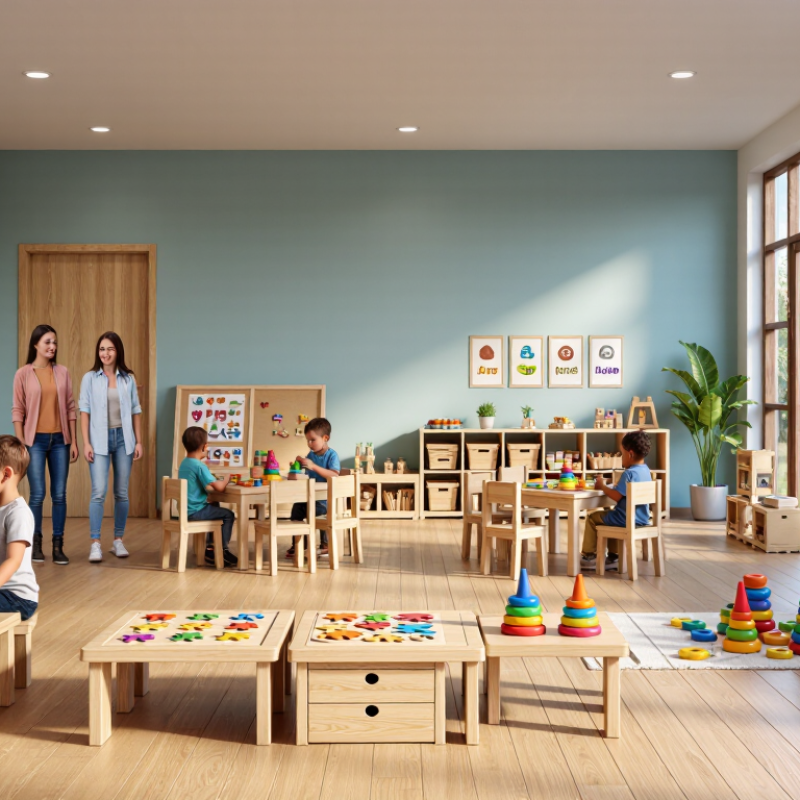
Global sourcing begins with a precise buyer requirement sheet. State the target age, learning goals, budget, order quantity, and delivery market. A three-year-old needs larger pieces than a five-year-old. Include dimensions, weight, material preferences, color limits, and packaging language. Buyers should also request safety test reports, factory quality records, and clear batch identification.
Preschool toys usually fit several practical categories. Pretend-play sets support language, cooperation, and daily-life skills. Building toys develop spatial thinking and fine motor control. Puzzles encourage patience and visual matching. Sensory products offer texture, sound, or simple movement, but they need careful material checks. Art supplies should use washable, child-appropriate components. Outdoor toys require stable structures, smooth edges, and packaging that survives long transport.
Ask suppliers for samples before discussing large orders. Test small parts, hinges, seams, paint surfaces, and instruction clarity. Place a sample on a classroom table, not only in a showroom. Watch how children handle it, including rough handling and repeated dropping. A low price may hide weak packaging or inconsistent materials. That matters.
A checklist can still miss important details. Local educators may reject a toy that looks attractive but feels difficult to use. Review feedback from teachers, distributors, and parents in the target market. Keep records of sample changes, inspection results, and approved specifications. Clear documentation makes supplier comparisons more reliable and reduces avoidable disputes.
How to Source Preschool Learning Toys for Global Buyers?
Define buyer requirements and prioritize preschool toy categories by learning-value coverage.
The index uses a 1–5 buyer-planning scale across five practical requirements: fine-motor development, cognitive development, language and social play, physical activity, and STEM exploration. Higher scores indicate broader learning coverage and stronger suitability for a diversified preschool toy assortment. Buyers should also verify age grading, material safety, testing documentation, durability, cleanability, and packaging requirements for each destination market.
Evaluate Safety, Quality, and Age-Appropriate Learning Features
How to Source Preschool Learning Toys for Global Buyers?
Safety must be checked before learning value. The U.S. Consumer Product Safety Commission reported an estimated 231,700 toy-related injuries in 2023 among children under 15. That figure should change sourcing habits. Request test reports for choking hazards, sharp edges, small magnets, sound levels, and material migration. Check production samples, not only digital documents. A supplier’s certificate is evidence, not proof.
Age guidance needs practical testing. A three-year-old may place a bead in the mouth, pull a weak seam, or lose a tiny puzzle piece. Choose larger parts, rounded edges, washable surfaces, and simple controls for younger children. Learning features should match real abilities. Preschoolers benefit from sorting colors, counting objects, matching shapes, and practicing hand coordination. Avoid toys that promise advanced skills without clear, observable activities.
The European Commission’s Safety Gate 2023 report identified toys among the most frequently notified product categories, reinforcing the need for market-specific checks. Confirm labeling, warnings, language, and tracking requirements for each destination. Review batch records and conduct random inspections before shipment. I would also test classroom use for ten minutes, because confusing instructions often appear only during play. This step takes time. It can still reveal poor durability, excessive noise, or an age label that feels optimistic.
| Product Category | Recommended Age | Core Learning Features | Key Safety Checks | Material and Quality Criteria | Relevant Compliance Considerations | Buyer Evaluation Metrics | Overall Sourcing Risk |
|---|---|---|---|---|---|---|---|
| Large-piece construction blocks | 12 months–5 years | Supports fine-motor coordination, spatial reasoning, color recognition, early engineering concepts, and cooperative play. | Pieces should be too large to create a small-parts choking hazard for the stated age group; no sharp edges, detachable magnets, or easily broken components; rounded corners and stable dimensions. | Even surfaces, consistent molding, secure color adhesion, low odor, and resistance to repeated drops and washing. Plastic should not crack or splinter during normal play. | Age grading and small-parts requirements should be assessed for the destination market. Common reference frameworks include ASTM F963, EN 71, and ISO 8124. | Drop-test performance, dimensional consistency, surface finish, color-rub resistance, packaging clarity, and percentage of rejected pieces in inspection. | Low to medium |
| Chunky shape-sorting toys | 18 months–4 years | Develops shape matching, visual discrimination, hand-eye coordination, problem solving, and early vocabulary. | Openings must not trap fingers; pieces should be large enough for the declared age range; hinges, lids, and handles must resist pinching and detachment; no accessible sharp flashing. | High-impact body, smooth rounded shapes, durable joints, and securely printed or molded markings. Avoid loose inserts that can be swallowed. | Verify mechanical and physical-property testing, flammability requirements, migration of certain elements, and labeling rules applicable to each destination. | Fit accuracy, force required for insertion, hinge-cycle durability, edge inspection, label legibility, and age-grade consistency. | Low to medium |
| Wooden puzzles and peg boards | 2–5 years | Encourages concentration, matching, sequencing, visual-spatial skills, vocabulary development, and independent problem solving. | Check for splinters, loose knobs, exposed fasteners, pinch points, and detachable small parts. Knobs should be firmly attached and suitable for the stated age. | Wood should be dry, stable, smoothly sanded, and free from cracks. Coatings should resist peeling and saliva contact under normal use; edges must be rounded. | Coatings, adhesives, and substrates should be assessed for applicable chemical restrictions. Testing may include heavy metals, formaldehyde where relevant, and flammability. | Surface smoothness, knob pull strength, board warping, coating adhesion, puzzle-piece fit, and moisture resistance. | Medium |
| Pretend-play kitchen and role-play sets | 3–6 years | Promotes language, social-emotional development, imagination, turn-taking, categorization, and practical-life vocabulary. | Inspect small accessories, cords, hinges, magnets, simulated food pieces, and removable parts. Ensure the set has no sharp utensils or unstable tall components. | Parts should withstand repeated handling and cleaning. Printed details should remain readable; assembly points should stay secure after repeated use. | Age grading must reflect accessory size and play complexity. Electrical or battery-operated features, if included, require additional product-specific evaluation. | Accessory retention, stability testing, repeated-use cycles, cleanability, assembly instructions, and completeness of packed components. | Medium |
| Early counting and pattern-manipulation sets | 3–6 years | Builds number recognition, one-to-one correspondence, sorting, sequencing, pattern creation, and introductory mathematical reasoning. | Counting pieces must match the age label and be checked for choking risk. Avoid unsecured magnets, sharp counters, and pieces that can fracture under compression. | Use high-contrast, durable markings; maintain consistent piece size and weight; ensure trays and connectors resist cracking and deformation. | Small-parts assessment is essential. If magnets are present, verify magnet retention and applicable magnetic-toy requirements before approval. | Counting accuracy, color consistency, connector strength, piece retention, print durability, and instruction quality. | Medium |
| Washable sensory and fine-motor activity kits | 2–5 years | Supports tactile exploration, pincer grasp, bilateral coordination, descriptive language, and sensory discrimination. | All components should be non-toxic and free from accessible loose fibers, sharp tools, unsafe liquids, and easily swallowed items. Confirm hygiene and cleaning instructions. | Materials should tolerate repeated cleaning without shedding, staining, or becoming brittle. Fabric components should have secure seams and reinforced attachment points. | Check material-specific chemical and flammability requirements. Clearly state whether components are washable, reusable, or intended for supervised use only. | Wash-cycle durability, seam strength, odor after cleaning, colorfastness, drying time, and replacement-part availability. | Medium |
| Simple musical rhythm instruments | 3–6 years | Develops rhythm, auditory discrimination, coordination, self-expression, listening skills, and group participation. | Control sound output to reduce excessive exposure during close-range play; check handles, straps, beads, membranes, and fasteners for detachment or breakage. | Sound-producing components should remain secure after repeated impact. Surfaces must be smooth, washable where appropriate, and resistant to cracking. | Assess physical safety, flammability, chemical content, and any applicable acoustic or battery-related requirements. Include supervision guidance when needed. | Sound-level consistency, impact resistance, fastener retention, handle strength, surface cleanliness, and packaging protection. | Medium |
| Pre-writing boards and tracing tools | 3–6 years | Improves hand control, visual tracking, shape formation, letter readiness, and left-to-right or directional awareness. | Writing tools should have rounded ends and secure caps; boards must not have sharp corners, accessible splinters, or easily removable decorative parts. | Use smooth writing surfaces, durable grooves, non-fraying cords, and markings that remain visible after repeated use. Erasable components should be easy to clean. | Review age labeling, material safety, coating durability, and any ink or pigment requirements. Include clear instructions for supervised use where relevant. | Groove depth consistency, tool strength, surface wear, cap retention, cleanability, and readability of learning prompts. | Low to medium |
| Reusable picture-card and language sets | 3–6 years | Supports vocabulary, categorization, storytelling, memory, pronunciation practice, and early communication skills. | Cards should not have sharp corners or easily detachable coatings. If packaged with clips or tokens, assess each accessory separately for small-parts risk. | Use thick, durable stock or washable synthetic sheets with non-peeling surfaces and strong packaging. Images should be clear, culturally appropriate, and age suitable. | Confirm ink, coating, adhesive, and packaging-material requirements. Provide multilingual instructions and market-specific warnings when selling globally. | Card thickness, corner-rounding accuracy, abrasion resistance, print clarity, water resistance, and translation quality. | Low |
| Balance, movement, and gross-motor equipment | 3–6 years | Develops balance, body awareness, coordination, spatial judgment, confidence, and cooperative movement skills. | Check load capacity, anti-slip surfaces, stability, fall zones, pinch points, and edge protection. Instructions should specify adult supervision and suitable flooring. | Components should resist repeated loading, UV exposure where applicable, and surface wear. Feet, joints, and connectors must remain secure during use. | Product-specific physical-safety standards may apply. Review warning labels, installation instructions, maximum user weight, and intended-use conditions for each market. | Static-load testing, repeated-use fatigue, slip resistance, wobble tolerance, assembly accuracy, and instruction completeness. | Medium to high |
| Supplier documentation and shipment controls | All age groups | Ensures that the learning claims, age grade, safety instructions, and product configuration remain consistent from sample approval through mass production. | Require production samples, test reports from competent laboratories, traceable batch coding, corrective-action records, and pre-shipment inspection before release. | Define approved materials, colors, dimensions, tolerances, packaging, carton strength, and acceptable quality limits in a written specification. | Map each destination to applicable toy-safety, chemical, labeling, packaging, and language requirements. Do not rely on a single market's certification for all regions. | Document completeness, report validity, sample-to-bulk consistency, defect rate, on-time corrective action, and shipping-damage rate. | Controllable with verification |
Identify Reliable Toy Manufacturers and Verify Their Credentials
A dependable preschool toy supplier should prove more than production capacity. Ask for a current business license, factory address, ownership details, and export history. Verify each document through official registries, not only scanned files. ISO’s 2022 Survey recorded more than 1.2 million ISO 9001 certificates worldwide, but certification alone does not guarantee safe toys. Check the certificate number, scope, issuing body, and expiry date.
Request recent test reports for paint migration, small parts, sharp edges, flammability, and material safety. The report should match the exact toy, model number, and production batch. It should also identify the testing laboratory clearly. The European Commission’s 2023 Safety Gate report listed 3,412 safety alerts, with toys among frequently notified products. That figure shows why old or generic reports are weak evidence.
Visit the factory when possible. Watch workers measure loose parts, inspect seams, and separate rejected items into labeled bins. Ask how they control changes in plastic, paint, packaging, and subcontractors. A supplier that refuses traceability deserves caution. Short video calls help, but they cannot replace an independent audit. I have seen polished samples hide inconsistent batch quality. That risk is easy to underestimate. Keep purchase terms specific, including inspection rights, corrective actions, documentation duties, and shipment rejection rules. Recheck credentials before every major order, because a valid certificate today may not cover tomorrow’s production.
Compare Pricing, Minimum Orders, Sampling, and Production Capacity
Sourcing preschool learning toys for global buyers requires more than comparing unit prices. Ask suppliers for a tiered quotation at 500, 1,000, and 5,000 units. A low price may exclude packaging, inspection, tooling, or export preparation. Calculate the landed cost, not just the factory quote. Small details matter.
Minimum order quantities can differ by color, design, and packaging style. A supplier may accept 500 pieces for one design but require 2,000 pieces for custom cartons. Request the MOQ for each production element. This prevents unused packaging from sitting in storage. It happens.
Always order samples before approving a purchase order. Compare color consistency, surface smoothness, moving parts, labels, and carton strength. Test the toy under realistic handling, including repeated drops and cleaning. Ask for material information and age-appropriate safety documentation. Sample approval should be recorded with photos and written specifications.
Production capacity needs careful verification. Request monthly output, current order commitments, staffing patterns, and machinery details. A factory claiming 50,000 units monthly may only achieve that volume during a quiet season. My early sourcing reviews focused too heavily on equipment. I later learned that scheduling discipline often mattered more. Ask for a production timeline with raw material arrival, assembly, inspection, and shipment dates. Leave room for delays. A perfect plan rarely survives real production.
Manage Compliance, Logistics, Importing, and Long-Term Supply Chains
How to Source Preschool Learning Toys for Global Buyers?
Sourcing preschool learning toys requires more than comparing factory prices. Each product should match the destination market’s safety requirements, age grading, labeling rules, and chemical restrictions. Request recent test reports, material declarations, and production samples before placing a purchase order. A wooden puzzle may look simple, yet paint adhesion, small parts, and sharp edges need documented inspection.
Logistics planning should begin during product development. Confirm carton dimensions, gross weight, pallet limits, and moisture protection with the supplier. Use a written inspection plan covering color, function, packaging, and quantity. Importing also demands accurate product descriptions, tariff classification, commercial invoices, packing lists, and certificates required by the destination country. A customs broker can review documents, but the buyer remains responsible for checking them. Small errors can delay a full container.
Long-term supply depends on more than a low first quotation. Record material specifications, approved samples, lead times, and corrective-action procedures in the purchasing agreement. Keep buffer stock before major school seasons, and review forecasts with suppliers each month. Our early forecasts were too optimistic, so we now compare sales data with factory capacity before confirming volumes. One supplier may not be enough for critical items. Still, adding a second source can create inconsistent colors or learning functions without strong quality controls. Regular batch testing and clear communication help expose those gaps.
FAQS
State the target age, learning goals, budget, quantity, and destination market. Include dimensions, weight, materials, colors, and packaging language. Clear details reduce misunderstandings.
Pretend-play toys build language and cooperation. Building toys improve spatial thinking and fine motor skills. Puzzles support patience and visual matching. Sensory products need careful material checks.
Samples reveal weak hinges, rough seams, poor paint, and unclear instructions. Test them on a classroom table. Real handling matters more than showroom appearance.
Request current safety reports, material declarations, and factory quality records. Check small parts, sharp edges, surface finishes, and moving components. Keep photos and approved specifications.
Request tiered quotations for different quantities. Calculate landed cost, including packaging, inspection, tooling, transport, and import preparation. A low unit price may hide extra charges.
MOQ can change by color, design, and packaging style. Ask for separate requirements for every production element. Otherwise, unused cartons may remain in storage. It happens.
Ask about monthly output, current commitments, staffing, machinery, and production schedules. Confirm raw material, assembly, inspection, and shipment dates. Leave room for delays. Plans fail sometimes.
Confirm carton size, gross weight, pallet limits, and moisture protection. Prepare accurate product descriptions, classification details, invoices, packing lists, and required certificates. Small errors can delay shipments.
Record approved samples, material specifications, lead times, and corrective-action procedures. Compare sales forecasts with real factory capacity. Consider a second source, but control color and function differences carefully.
Conclusion
Sourcing Preschool Learning Toys for global buyers requires a clear and systematic evaluation process. Buyers should first define their target age groups, educational goals, product categories, materials, design preferences, and expected market positioning. Each toy should then be assessed for safety, durability, construction quality, and age-appropriate learning value, including opportunities to support creativity, motor skills, communication, problem-solving, and social development.
Reliable manufacturers can be identified by reviewing their experience, production facilities, quality-control procedures, certifications, and customer references. Buyers should compare unit pricing, minimum order quantities, sample policies, customization options, production capacity, and delivery schedules before placing an order. It is also essential to plan product testing, packaging, labeling, documentation, customs requirements, shipping arrangements, and inventory management in advance. Clear communication, regular quality inspections, and transparent agreements can help reduce supply risks and build a stable, long-term international supply chain.

Blog Tags: