B. toys Blog — Play Ideas, Learning Guides & Parenting Inspiration

💡 Inspiration & Insights

Play, Learn & Grow Together

Explore expert tips, creative play ideas, and helpful guides for parents.

Read Latest Articles
🧗 Active Play

Indoor Play & Movement

Keep little bodies active and minds engaged with simple indoor setups.

Explore Active Toys
🎵 Music & Sound

Nurturing Musicality in Toddlers

How rhythm and interactive sound foster early cognitive growth.

Discover Musical Toys
🧩 Wooden Classics

The Value of Tactile Wooden Toys

Why open-ended wooden play supports sensory development.

View Wooden Toys
0%

Choosing Wooden Toy Food Sets can look simple until you compare materials, finishes, shapes, and safety details. A bright wooden apple may look charming, yet its paint quality and edges matter more than its color. Children may drop pieces, chew corners, or place tiny items near their mouths. Parents need practical guidance, not just attractive product photos.

Dr. Amanda Gummer, a child-development and play expert, has said, “Good toys invite children to think, create, and connect.” That idea fits pretend food especially well. A wooden sandwich can become lunch, a shop display, or part of a pretend family meal. The best set supports open-ended play without forcing one storyline. Sometimes, less is better.

This guide explores seven useful tips for buying Wooden Toy Food Sets. It considers age suitability, piece size, wood quality, non-toxic finishes, realistic design, storage, and long-term play value. You will notice details such as smooth banana edges, firmly attached strawberry leaves, and a box that does not collapse after three uses. These small features often reveal a product’s real quality.

No set is perfect. A larger collection may offer variety but create clutter. A cheaper set may seem practical but need closer inspection. Even experienced buyers can overlook a loose fastening or an unclear material description. Use these tips as a careful checklist, then judge the set against the child’s habits, play space, and supervision needs. Safe, durable pretend food should invite imagination while remaining easy for adults to trust.
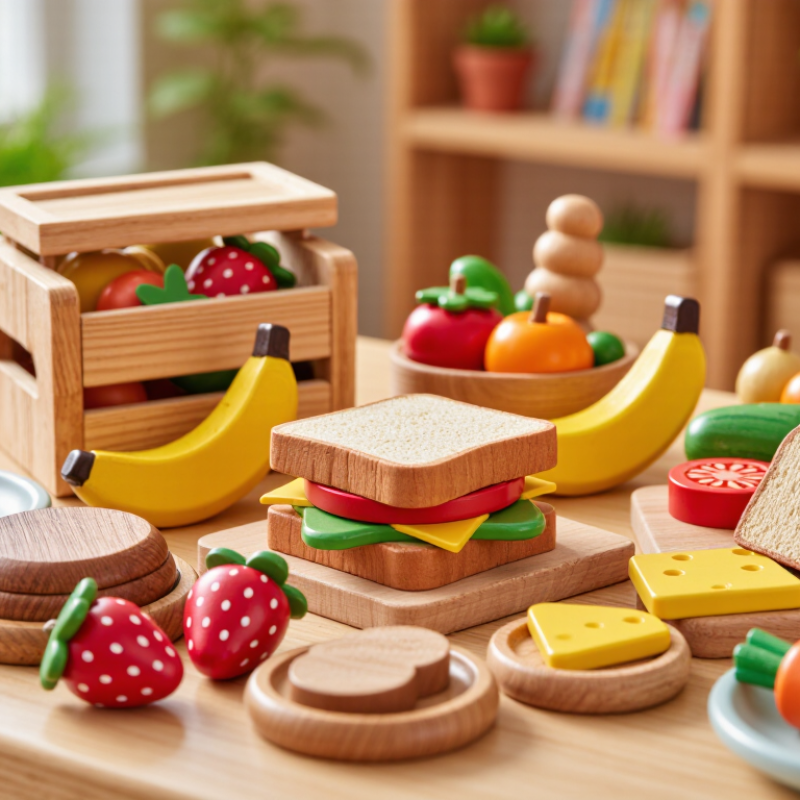
7 Tips for Buying Wooden Toy Food Sets

Understanding Wooden Toy Food Sets and Their Educational Value

7 Tips for Buying Wooden Toy Food Sets

Understanding Wooden Toy Food Sets and Their Educational Value

Wooden toy food sets turn pretend kitchens into small learning spaces. Children sort colors, name ingredients, practice counting, and build simple stories. In my experience, realistic shapes encourage longer play than flashy pieces.

Tip 1: Choose pieces with clear forms, such as a round orange or a long carrot.

Tip 2: Check the recommended age and inspect every edge. Smooth surfaces matter because young children handle toys closely. Avoid loose parts for children who still mouth objects.

Tip 3: Look for sturdy wood and securely attached details. A well-made piece should tolerate repeated drops and enthusiastic cooking.

Tip 4: Consider variety, including fruits, vegetables, grains, and serving tools. This supports vocabulary and introduces different foods without turning play into a lesson.

Tip 5: Select sets that invite open-ended play. A child might run a café, prepare dinner, or sort food by color. The learning changes with the story.

Tip 6: Think about cleaning and storage. Wipeable surfaces and a simple basket reduce daily frustration.

Tip 7: Match the set to the child’s current interests, not only the adult’s idea of educational value.

I once chose a beautifully detailed set that was too complicated, and it was mostly ignored. That mistake still matters. Educational value depends on use, conversation, and freedom to experiment. Ask questions during play, but leave room for silence and imagination.

Checking Materials, Safety Standards, and Child-Friendly Construction

7 Tips for Buying Wooden Toy Food Sets

A wooden toy food set should feel solid, smooth, and easy for small hands to control. Check the wood surface for splinters, cracks, sharp corners, or loose layers. Water-based paint may sound reassuring, but wording alone proves little. Ask whether the finish has been tested for children’s products. Look for clear material information and reliable compliance documents. Relevant standards may include ASTM F963, EN 71, or local equivalents. Requirements differ by market, so check the rules where the toy will be used.

Look closely. Food pieces should not contain detachable eyes, beads, magnets, or tiny accessories for younger children. Pull gently on handles, toppings, and fastened parts. They should stay attached without excessive force.

Pay attention to size recommendations, choking warnings, and the child’s actual habits. Age labels guide parents, but they cannot replace supervision. A three-year-old may still chew a small piece.

Child-friendly construction also means practical design. Rounded edges, lightweight pieces, and simple shapes support safer pretend play. Avoid sets with strong chemical odors or paint that flakes after light rubbing.

Ask for proof. Product photos can hide rough cuts and weak joints. I once assumed a heavier toy was automatically safer, but weight can make it harder to lift or drop safely.

A careful inspection remains more useful than attractive packaging. Some details may still be unclear, and that uncertainty deserves attention before purchase.

Choosing Suitable Pieces for Age, Skills, and Pretend-Play Goals

7 Tips for Buying Wooden Toy Food Sets

A useful set begins with the child, not the kitchen theme. For toddlers, choose large, lightweight pieces with smooth edges and simple shapes. Avoid parts that can fit completely inside a child’s mouth. Check the stated age range, then consider actual behavior. A careful three-year-old may manage more than an impulsive four-year-old. Supervision still matters.

Match the pieces to developing skills. Chunky fruits support grasping, sorting, and naming. Cutting sets can strengthen hand control, but fasteners should connect securely. Select solid wood, smooth surfaces, and finishes designed for children’s toys. Paint should not flake during ordinary play. Look for clear safety information and testing against recognized toy-safety requirements in your region. Inspect every piece before use. Small cracks can appear after repeated drops. I once assumed a sturdy-looking piece was safe, but its loose connector changed my view.

Choose familiar foods to support realistic pretend play, then add a few open-ended pieces. A loaf, bowl, or wooden spoon can become breakfast, a shop display, or a picnic prop. For restaurant play, include varied shapes and serving items. For language practice, choose foods the child can name easily. For quieter sorting games, use colors and categories. Storage also matters; a small basket encourages children to collect and return pieces. Too many choices may overwhelm them. A smaller set can sometimes create better stories.

Wooden Toy Food Guide: Suggested Pieces by Age and Pretend-Play Goal

A practical planning guide based on increasing fine-motor, matching, counting, and storytelling demands.

Start with larger, easy-to-grasp food pieces for younger children, then add cut-and-match foods, counting groups, and role-play accessories as skills develop. Always follow the toy maker’s age guidance and supervise children around small parts.

Comparing Set Size, Variety, Durability, and Storage Options

7 Tips for Buying Wooden Toy Food Sets

Set size affects play more than many buyers expect. A compact set suits a small kitchen and travels easily. Larger sets create fuller pretend meals but need more shelf space. Count the pieces, not only the box size. Ten useful pieces may outperform thirty repeated shapes. Tip 1: Choose a set that matches the child’s play area and attention span. A crowded basket can reduce creative play.

Variety should include recognizable foods, serving pieces, and different textures. Look for fruits, vegetables, bread, and simple utensils. This encourages sorting, naming, and imaginative menus. Avoid sets with many near-identical items. They look generous online, but feel repetitive during play. Tip 2: Check the actual piece list before buying. Product photographs can make a modest assortment seem larger. My first choice was too large. I underestimated cleanup time.

Durability depends on solid construction, smooth sanding, and securely attached details. Inspect edges, seams, handles, and painted surfaces carefully. Water-based finishes may be preferable, but verify the product’s safety information and age guidance. Wooden food also needs dry storage. A fabric bin protects pieces, while a lidded box keeps dust away. Tip 3: Select storage with separate space for tiny accessories. Missing pieces happen. A simple inventory can help. Consider whether the box will survive daily opening, carrying, and occasional drops. Reliable design matters more than decorative packaging.

Evaluating Design, Sustainability, Price, and Overall Value

When buying wooden toy food sets, inspect design before admiring the finish. Pieces should feel balanced, with rounded edges and no loose knobs. Check the age guidance carefully. Tiny parts can create avoidable risks for younger children. A good set also supports open-ended play. Slices, bread, and vegetables should combine in many pretend meals, not one fixed scene. I have found that realistic colors help role-play, but excessive detail can reduce durability. Children drop food. Often.

Sustainability needs evidence, not simply a wooden appearance. The FAO’s Global Forest Resources Assessment 2020 reported that 420 million hectares of forest were lost between 1990 and 2020. Ask whether the timber is traceable, responsibly sourced, and efficiently used. Water-based finishes may be preferable, but sellers should clearly identify testing and safety compliance. The 2024 Global Resources Outlook also warns that global resource extraction could rise by 60% by 2060 without major changes. That makes repairable construction more valuable. Price should reflect thickness, joinery, finish quality, and the number of usable pieces. A cheaper set may splinter, fade, or lose parts quickly. Yet expensive does not guarantee better value. Compare cost per durable piece, storage needs, and play flexibility. I still sometimes overvalue attractive packaging. The better test is simple: Can the set survive repeated play, cleaning, and imagination?

FAQS

What should a safe wooden toy food set feel like?

It should feel solid, smooth, and easy for small hands to control.

Is water-based paint automatically safe for children?

No. The label alone proves very little.

How can I check for loose toy parts?

Gently pull handles, toppings, and attached pieces.

Can age labels replace supervision?

No. Age labels offer guidance, not complete protection.

Which pieces suit toddlers best?

Choose large, lightweight pieces with rounded edges.

How can toy food support children’s developing skills?

Chunky fruits can encourage grasping, sorting, and vocabulary.

Is a heavier wooden toy necessarily safer?

Not always. Weight can make lifting and dropping more difficult.

What should I do when product information feels incomplete?

Ask for testing details and inspect the actual pieces carefully.

Conclusion

Choosing the right Wooden Toy Food Sets involves more than picking the most colorful or largest collection. First, consider their educational value: pretend food can encourage imagination, language development, social interaction, sorting, counting, and early understanding of healthy eating. Examine the materials and construction carefully, looking for smooth surfaces, secure parts, non-toxic finishes, and age-appropriate safety features. The pieces should match a child’s age, motor skills, interests, and preferred style of pretend play.

It is also helpful to compare the number and variety of pieces with the child’s needs. A well-balanced set may include fruits, vegetables, basic meals, and cooking accessories without becoming difficult to organize. Look for durable construction, practical storage, and designs that can withstand frequent play. Finally, consider sustainability, repairability, appearance, and price together rather than focusing on cost alone. The best choice offers lasting educational value, safe materials, enjoyable play opportunities, and overall quality that suits the child and family.

Cassandra

Cassandra

Cassandra is a dedicated marketing professional with a profound expertise in our company’s product offerings. With years of experience in the industry, she possesses an in-depth understanding of market trends and consumer behavior, which allows her to effectively communicate the unique advantages......