B. toys Blog — Play Ideas, Learning Guides & Parenting Inspiration
Play, Learn & Grow Together
Explore expert tips, creative play ideas, and helpful guides for parents.
Read Latest ArticlesIndoor Play & Movement
Keep little bodies active and minds engaged with simple indoor setups.
Explore Active ToysNurturing Musicality in Toddlers
How rhythm and interactive sound foster early cognitive growth.
Discover Musical ToysThe Value of Tactile Wooden Toys
Why open-ended wooden play supports sensory development.
View Wooden ToysChina Top 10 Kids Bath Toys Manufacturers?
Table of Contents
- How China’s Kids Bath Toy Manufacturing Industry Is Defined
- Criteria for Selecting the Top 10 Chinese Bath Toy Manufacturers
- Profiles of China’s Top 10 Kids Bath Toy Manufacturers
- Product Categories, Safety Standards, and Customization Options
- How to Choose a Reliable Chinese Bath Toy Manufacturer
- FAQS
- Conclusion
- Related Posts
China’s Kids Bath Toys sector is expanding alongside broader toy-market demand, but reliable manufacturer comparisons require more than product photos or search rankings. Grand View Research valued the global toys market at approximately USD 108.7 billion in 2023, with continued growth projected through 2030. Circana also reported a recovery in global toy sales during the first half of 2024. These figures show commercial momentum, not automatic product quality.
The manufacturers featured in this China Top 10 list should be assessed through practical evidence. Look for factory experience, material transparency, mold cleanliness, drainage design, packaging control, and export documentation. Compliance with China’s GB standards, ASTM F963, and EN 71 can strengthen supplier credibility, although certificates must match the exact product and production batch. A small bath cup may look harmless. Hidden moisture can still create hygiene concerns.
Pediatrician and child-safety expert Dr. Benjamin Hoffman has stated, “Drowning is silent and can happen quickly.” His warning applies directly to bath toys: toys never replace active adult supervision. Buyers should also examine rounded edges, secure components, non-toxic materials, and designs that discourage water retention.
This ranking is not absolute. Public information can be incomplete, and some factories operate through trading companies or multiple brand names. That limitation deserves attention. The strongest suppliers combine responsive communication with traceable testing, stable production, and realistic claims. By comparing these details, importers and retailers can identify China-based Kids Bath Toys manufacturers with stronger evidence, rather than choosing only by price or attractive packaging.
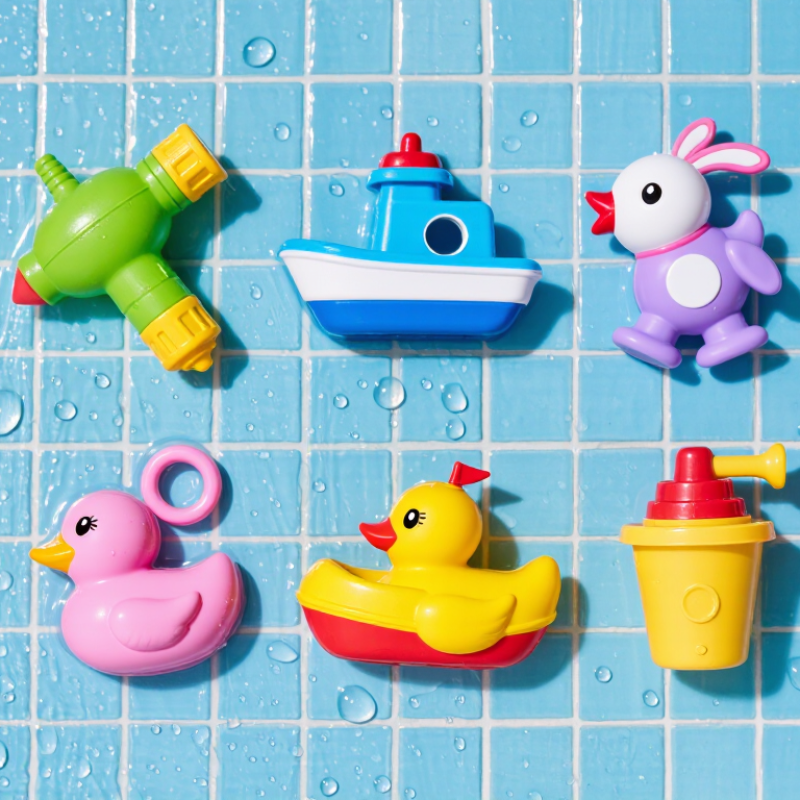
How China’s Kids Bath Toy Manufacturing Industry Is Defined
China’s kids bath toy manufacturing industry is defined by dense supply networks, practical engineering, and export-focused quality control. Small workshops often work beside mold makers, plastic suppliers, painters, and packaging producers. This closeness shortens development time. It also creates uneven quality.
Manufacturers usually produce floating toys, water wheels, squeeze animals, and bath puzzles through OEM or ODM programs. Food-grade silicone, ABS, and soft PVC are common material choices, depending on the design. Engineers check mold edges, drainage holes, color stability, and small-part risks. Testing may include migration, mechanical safety, and applicable standards such as EN71 or ASTM F963. A reliable supplier should provide current test reports, traceable material records, and clear inspection procedures.
The strongest candidates among China’s top ten manufacturers are not judged by colorful catalogs alone. Production capacity, mold accuracy, worker training, defect rates, and communication deserve equal attention. Factory audits can reveal details that samples hide, such as dusty assembly areas or poorly sealed cartons. That matters.
A sample may look excellent while its second production batch changes slightly. This is a common weakness, and buyers should not ignore it. Written specifications, pre-shipment inspections, and retained samples reduce uncertainty. Still, no process is perfect. Responsible sourcing means reviewing evidence repeatedly, not trusting impressive promises.
Criteria for Selecting the Top 10 Chinese Bath Toy Manufacturers
Selecting China’s top ten kids’ bath toy manufacturers requires more than comparing catalog size or factory photos. Safety evidence should lead the review. Request current test reports for material safety, small parts, sharp edges, and age grading. Reports must match the exact product, not a similar sample. Check whether silicone, ABS, or other materials are clearly identified. Ask for batch records and traceable production dates. These details show operational discipline.
Production capability matters during real use, not only during a factory visit. Inspect molding lines, assembly areas, drying controls, and packaging storage. For water toys, examine drainage holes and hidden cavities where moisture may remain. Request samples after repeated filling, squeezing, washing, and dropping. A toy that looks excellent on day one may develop odor or loose parts later. That weakness is easy to miss. Ask how defects are recorded, corrected, and prevented in later batches. Independent inspections can add useful evidence for larger orders.
Reliable suppliers communicate clearly about minimum order quantities, tooling ownership, lead times, and replacement policies. Evaluate sample response speed and the accuracy of technical answers. Manufacturers should provide drawings, packing specifications, carton tests, and export documents. Factory experience is valuable, but it should be supported by verifiable records. Be careful with polished promises. One audit may not prove consistent quality. Use a scoring sheet covering compliance, materials, quality control, capacity, communication, and after-sales handling. Rank manufacturers by evidence, while leaving room to review weak or uncertain findings.
Profiles of China’s Top 10 Kids Bath Toy Manufacturers
China’s top 10 kids bath toy manufacturers show a wide range of production strengths. Grand View Research valued the global toys market at about USD 108.7 billion in 2023. Bath toys remain a smaller niche, but demand favors safe materials, bright designs, and easy cleaning. These factories typically serve overseas buyers through OEM and private-label production.
The first profiles focus on injection-molding specialists using polypropylene or ABS. Several combine mold design, color matching, and assembly under one roof. Other manufacturers specialize in food-grade silicone, soft squeeze toys, or floating puzzles. Some offer recycled packaging and water-drainage designs. Small details matter. A blocked drain can create hygiene concerns.
Mid-sized factories often provide EN71, ASTM F963, CPSIA, and GB 6675 testing documents. Buyers should verify recent reports instead of trusting a supplier’s old certificate. ISO 9001 systems can support consistency, but certification alone does not prove product quality. China’s toy export industry remains substantial; China Toy and Juvenile Products Association reports show annual exports exceeding USD 30 billion in recent years. That scale supports competitive tooling and flexible order quantities.
The strongest profiles include factories with mold engineers, in-house quality teams, and traceable batch records. Some can produce prototypes within two weeks. Others offer slower development but stronger silicone expertise. I would not rank them by factory size alone. Production speed sometimes hides weak inspection. A better review examines material declarations, pull-force testing, packaging accuracy, and after-sales response. Supplier claims still need independent checking.
Product Categories, Safety Standards, and Customization Options
China’s top kids bath toy manufacturers usually cover three product categories: floating toys, pouring-and-scooping sets, and interactive water wheels.
A 2024 Fortune Business Insights report valued the global toys market at over US$100 billion, while bath products remain a smaller but fast-changing niche. Buyers now request mold-resistant designs, easy-drain structures, and packaging with less plastic. Practical details matter. A whale-shaped cup should empty fully, not trap cloudy water overnight.
Safety standards separate serious suppliers from attractive catalog pages. Factories should test materials for heavy metals, phthalates, sharp edges, small parts, and mechanical strength. Common references include ASTM F963, EN 71, ISO 8124, and China’s GB 6675 requirements.
The U.S. Consumer Product Safety Commission reported thousands of toy-related emergency department injuries annually, showing why age grading cannot be decorative text. Ask for recent laboratory reports, batch traceability, and production inspection records. One certificate is not enough.
Customization can include colors, molds, logo printing, instruction cards, and retail packaging.
Some manufacturers also develop silicone textures, temperature-sensitive surfaces, or modular bath puzzles. According to Grand View Research, the global baby toys market is projected to grow steadily through 2030, supporting demand for differentiated designs.
Yet customization may create new risks. A smaller suction cup can become a choking hazard. A hidden battery compartment may fail after repeated splashing. I would approve samples only after washing, dropping, squeezing, and storing them wet. Testing every real-life mistake is difficult, but ignoring those mistakes is worse.
How to Choose a Reliable Chinese Bath Toy Manufacturer
Choosing a reliable Chinese bath toy manufacturer requires more than comparing catalog prices. Grand View Research forecasts steady growth in the global bath toy market, with annual expansion above 8% in recent estimates. That growth attracts new suppliers. Some have attractive samples but limited quality systems. Request the business license, factory address, production capacity, and export history. Then verify them through a video audit or independent inspection.
Ask how the factory controls materials, molding, painting, and packaging. Children may chew or squeeze bath toys, so material declarations and laboratory reports matter. Request current tests for relevant requirements, such as EN 71, ASTM F963, and limits on restricted substances. A report should identify the exact product, material, test date, and laboratory. Do not accept a generic certificate. The OECD’s product safety work repeatedly highlights traceability as a practical tool for managing recalls and supplier risk.
Visit the production line when possible. Check whether workers record mold temperatures, inspect sharp edges, and separate rejected pieces. Ask for batch numbers on cartons and retain sealed samples from every shipment. Small details matter. A supplier that answers clearly is usually safer than one promising everything. Still, my judgment may be imperfect: a clean showroom cannot prove consistent production. Use a pre-production sample, a pilot order, and independent pre-shipment inspection. Discuss mold ownership, defect limits, replacement terms, and realistic lead times in writing. Reliability develops through evidence, not confident messages.
FAQS
Common categories include floating toys, pouring cups, scooping sets, and interactive water wheels. Each should drain easily. A whale-shaped cup should not hold cloudy water overnight.
Request tests for heavy metals, restricted chemicals, sharp edges, small parts, and mechanical strength. Check the age grading carefully. It must match actual risks. One certificate is not enough.
Ask for its business license, factory address, production capacity, export history, material declarations, and current laboratory reports. Reports should identify the product, material, date, and laboratory. Generic paperwork is weak evidence.
Use a video audit or independent inspection. Review molding, painting, packaging, and rejected pieces. Look for recorded mold temperatures and carton batch numbers. A clean showroom proves little.
Options may include colors, molds, printed marks, instruction cards, and packaging with less plastic. Some factories develop textured surfaces or modular bath puzzles. Custom shapes need extra testing.
Smaller suction cups may become choking hazards. Hidden battery compartments may fail after repeated splashing. Wash, drop, squeeze, and store modified samples while wet. I would not approve them quickly.
Request a pre-production sample, pilot order, and independent pre-shipment inspection. Discuss mold ownership, defect limits, replacement terms, and lead times in writing. Keep sealed samples from each shipment.
Inspect drain holes, seams, and closed cavities. Choose designs that empty completely after use. Dry toys upright near moving air. Claims about mold resistance still need practical checking.
Clear answers, traceable batches, consistent samples, and documented inspections are useful signs. Ask difficult questions. Trust should follow evidence, not confident messages. My judgment can still be wrong.
Conclusion
China’s Kids Bath Toys manufacturing industry combines product design, injection molding, assembly, packaging, and export services to create safe, engaging products for children’s bath time. This overview explains how the industry is defined and presents practical criteria for evaluating leading Chinese manufacturers, including production capacity, quality management, material selection, innovation, customization support, delivery reliability, and customer service. It also highlights the importance of transparent communication and consistent quality control when comparing suppliers.
The profiles of the top 10 manufacturers focus on their general capabilities rather than brand promotion, covering product categories such as floating toys, water-squirting toys, bath puzzles, sensory play items, and educational sets. The article also discusses common safety expectations, non-toxic materials, age-appropriate designs, testing procedures, packaging options, and private-label customization. Finally, it offers guidance for choosing a reliable partner by reviewing factory qualifications, sample quality, production processes, compliance documentation, minimum order requirements, lead times, and after-sales support.

Blog Tags: