B. toys Blog — Play Ideas, Learning Guides & Parenting Inspiration

💡 Inspiration & Insights

Play, Learn & Grow Together

Explore expert tips, creative play ideas, and helpful guides for parents.

Read Latest Articles
🧗 Active Play

Indoor Play & Movement

Keep little bodies active and minds engaged with simple indoor setups.

Explore Active Toys
🎵 Music & Sound

Nurturing Musicality in Toddlers

How rhythm and interactive sound foster early cognitive growth.

Discover Musical Toys
🧩 Wooden Classics

The Value of Tactile Wooden Toys

Why open-ended wooden play supports sensory development.

View Wooden Toys
0%

Sensory Baby Toys are designed to stimulate a baby’s developing senses through safe, simple play. They may include textured balls, soft blocks, crinkle books, teethers, or gentle rattles. Each toy offers a different experience. A crinkly page makes a light sound when squeezed. A ridged ring gives small fingers something to explore. Bright colors can also attract a baby’s early visual attention.

Play supports more than entertainment. Pediatric occupational therapists often connect supervised sensory play with early grasping, reaching, coordination, and body awareness. Repeatedly holding a toy can strengthen hand control. Passing it between hands encourages movement across the body. Different textures may help babies notice how objects feel. These benefits are possible, not guaranteed. Every baby develops differently. That difference matters.

A trustworthy choice should match the baby’s age, abilities, and current interests. Look for secure parts, smooth edges, washable materials, and clear safety information. Check seams often. Avoid loose pieces and toys that can fit fully inside a baby’s mouth. Adult supervision remains essential, especially with teethers, cords, or small accessories. Research does not support every marketing promise. A toy is not a shortcut to development. It may delight a baby today and be ignored tomorrow. Caregivers should watch, adjust, and stop when the baby seems tired or frustrated. The best Sensory Baby Toys encourage curious, comfortable exploration without forcing a response.
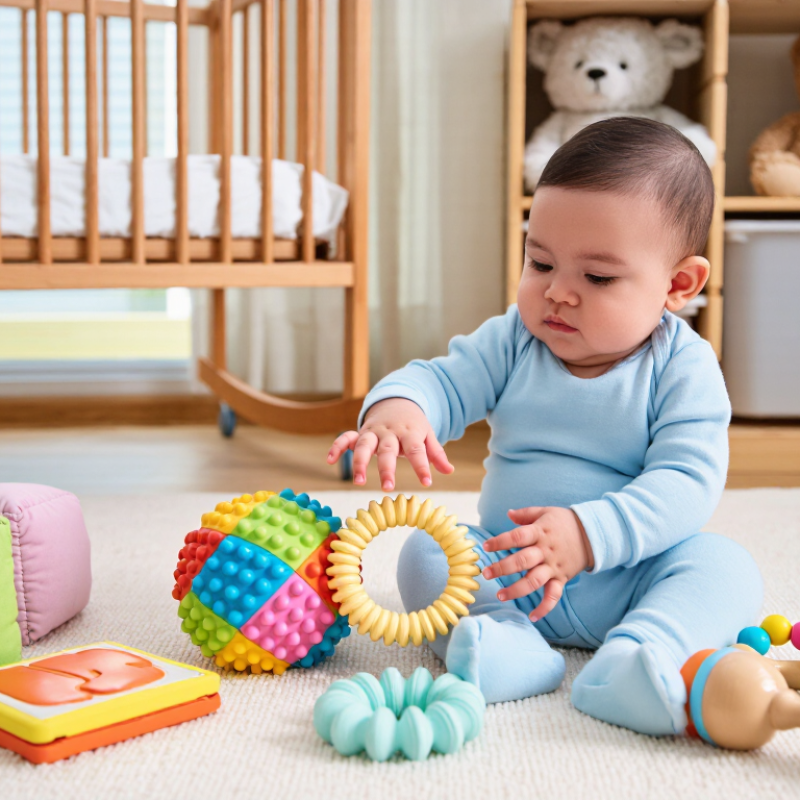
What Are Sensory Baby Toys and How Do They Help?

What Are Sensory Baby Toys?

What Are Sensory Baby Toys?

Sensory baby toys are play objects designed to stimulate a baby’s developing senses. They may include textured rings, soft crinkle cloths, gentle rattles, high-contrast cards, or cool silicone teethers. Each toy offers a noticeable feature, such as a rough surface, a light sound, or a bold visual pattern. Babies explore these features by touching, grasping, shaking, looking, and sometimes mouthing them.

These toys do not “train” a baby’s brain in a magical way. Their value comes from repeated, safe interaction. The American Academy of Pediatrics reported in Pediatrics that play supports language, executive function, and emotional development. A sensory toy can encourage a baby to reach, turn toward a sound, or hold an object with both hands. Those small actions build early coordination. The CDC’s developmental milestones also track behaviors such as looking at faces, reacting to sounds, and holding objects during early infancy.

Research-based guidance still matters. The World Health Organization recommends frequent interactive floor-based play for infants, including supervised tummy time for babies who are not yet mobile. A toy may help attract attention during this practice. However, overstimulation is possible. A baby who turns away, cries, or stiffens may need less noise, fewer colors, or a quiet pause. I sometimes see sensory toys described as essential, but that claim is too strong. A caregiver’s responsive presence often matters more than the toy itself. Always check age guidance, avoid loose small parts, and supervise mouthing or shaking play.

How Do Sensory Baby Toys Support Early Development?

Sensory baby toys support early development by turning ordinary play into small learning opportunities. They engage touch, sight, sound, movement, and sometimes safe chewing. A soft textured ball, for example, may encourage a baby to reach, grasp, squeeze, and transfer it between hands. These actions strengthen hand control and build early hand-eye coordination.

Pediatric occupational therapists often describe sensory play as a way to help babies notice cause and effect. A crinkly toy makes a sound when squeezed. A rattle responds when shaken. Through repetition, babies begin connecting their movements with results. This supports attention, curiosity, and early problem-solving. Small discoveries matter. Caregivers can watch whether a baby tracks a bright object, turns toward a gentle sound, or explores different textures. Those observations help adults choose suitable challenges.

Not every baby enjoys the same sensations. Some may smile at a textured toy, while others pull away from it. It is easy to expect quick progress, but development is uneven. A quieter toy may work better for an overstimulated baby. Flashing lights and loud sounds should not replace calm interaction. Safe toys should be large enough to prevent choking, securely made, and used with close supervision. Stop when the baby looks tired, distressed, or overwhelmed. The best sensory play leaves room for pauses, mistakes, and the baby’s own pace.

Which Senses Do These Toys Engage?

Sensory baby toys engage sight, sound, touch, movement, and sometimes smell. Bright contrasts help babies notice edges and patterns. Soft textures invite grasping, rubbing, and squeezing. A crinkly panel adds sound when tiny fingers move. These simple cause-and-effect moments build early attention, although not every toy suits every child.

Movement matters too. A toy placed slightly to the side can encourage turning, reaching, and head control. The World Health Organization’s 2019 guidelines recommend at least 30 minutes of tummy time daily for infants who are not yet mobile. That activity stimulates touch, balance, body awareness, and visual tracking. A toy should support movement, not replace floor play.

Taste and smell require more caution. Babies explore with their mouths, but loose parts create serious risks. The American Academy of Pediatrics advises avoiding small detachable components and checking toys for age-appropriate safety. The AAP’s clinical report, “The Power of Play,” links play with developing language, executive function, and self-regulation, but sensory toys are not magic tools. Some claims online sound stronger than the evidence. Watch the baby’s response: relaxed reaching suggests interest, while turning away, stiffening, or fussing may signal overload. References: WHO Guidelines on Physical Activity, Sedentary Behaviour and Sleep, 2019; American Academy of Pediatrics, The Power of Play, 2018.

What Types of Sensory Baby Toys Are Available?

Sensory baby toys are designed to engage sight, sound, touch, movement, and sometimes taste. Different toy types offer different learning experiences. Textured teethers support babies who explore with their mouths. Soft rattles introduce gentle sounds and encourage grasping. Crinkle toys add surprising noise during squeezing. High-contrast cards and baby-safe mirrors attract early visual attention. Soft fabric books combine pictures, textures, and shared reading. Activity mats may include hanging objects, varied fabrics, and simple movement challenges.

Stacking cups and nesting toys become useful as coordination improves. Babies can bang, fill, empty, and pass them between hands. Musical toys may support listening, but quieter sounds are usually more comfortable for young infants. Not every baby enjoys every sensation. Some prefer a smooth cloth, while others seek rough textures. I once underestimated how quickly a baby could lose interest in a toy. Variety matters, but too many objects can also overwhelm.

Tips: Choose toys suited to the baby’s age and current abilities. Check for loose parts, sharp edges, and damaged stitching before each use. Stay nearby during play, especially with teethers and small accessories. Let the baby lead. Offer one toy at a time, then pause and observe. Sensory play should feel calm, safe, and easy to stop. Never place a toy in a crib unless it is specifically approved for that sleep setting.

How Can Parents Choose and Use Them Safely?

Sensory baby toys include textured rings, soft rattles, crinkle cloths, and toys with gentle sounds. They invite babies to touch, grasp, mouth, and track movement. These actions may support early sensory learning and hand control, but one toy cannot teach every skill.

Parents should begin with the age label and the child’s actual abilities. A toy suitable for a six-month-old may still be unsafe for a baby who chews aggressively. Check seams, filling, paint, and detachable pieces before every use. Avoid small parts, loose cords, powerful magnets, and button batteries. Stay close.

The U.S. Consumer Product Safety Commission estimated 231,000 toy-related emergency department injuries among children under 15 in 2023. That figure covers all toys, not sensory toys alone, but it shows why supervision matters.

Choose toys that are large enough to avoid choking, easy to clean, and free from sharp edges. Offer one item at a time on a clear floor mat. Watch whether the baby startles at sudden sounds or becomes frustrated by complex textures. Softer, simpler toys may work better. Less can be better.

Pediatric guidance also supports keeping play interactive, with adults naming textures and following the baby’s attention. I would not assume every “sensory” claim is proven; product language can sound more scientific than the evidence. Stop using a toy when damage appears, and follow current safety notices from the relevant consumer-safety authority.

FAQS

What are sensory baby toys?

They are play objects that stimulate touch, sight, sound, movement, or safe mouthing. Examples include textured rings, crinkle cloths, and soft rattles.

How can sensory toys support early development?

Reaching, grasping, shaking, and tracking may support coordination. A baby might turn toward a rattle or hold a cup with both hands.

Which types of sensory toys are available?

Common choices include teethers, fabric books, high-contrast cards, mirrors, activity mats, nesting cups, and gentle musical toys. Variety helps.

How should caregivers choose an appropriate toy?

Check the age guidance and the baby’s actual abilities. Choose large, smooth, washable toys without loose parts, sharp edges, cords, magnets, or button batteries.

How can caregivers use sensory toys safely?

Stay nearby during play, especially when the baby mouths or shakes objects. Inspect seams, paint, filling, and stitching before each use.

What signs show that a baby feels overstimulated?

Turning away, crying, stiffening, or startling can signal discomfort. Pause the activity. Reduce noise and bright patterns.

Should babies use sensory toys during tummy time?

A toy may attract attention during supervised floor play. Place it nearby, not directly against the baby’s face, and follow the baby’s movements.

Are sensory toys essential for development?

No toy is essential. Responsive talking, shared floor play, and careful observation often matter more. Claims about guaranteed brain training deserve doubt.

Can every baby enjoy the same sensory toy?

No. One baby may prefer smooth fabric, while another seeks a rough ring. Start with one object and adjust slowly.

When should a sensory toy be discarded?

Stop using it when damage, loose stitching, exposed filling, or detachable pieces appear. Small flaws can become serious quickly.

Conclusion

Sensory Baby Toys are specially designed play items that encourage babies to explore through touch, sight, sound, movement, and sometimes taste. By offering different textures, colors, shapes, gentle sounds, and safe ways to grasp or shake, these toys can support early development. They may help strengthen hand-eye coordination, fine motor skills, attention, curiosity, sensory awareness, and early problem-solving abilities. Simple activities such as squeezing, reaching, stacking, or listening can also encourage communication and independent discovery.

Common types include soft textured toys, rattles, crinkle objects, teethers, activity mats, stacking cups, and toys with mirrors or contrasting patterns. Parents should select age-appropriate products made from safe, durable materials without small detachable parts, sharp edges, or loose components. Toys should be introduced gradually in a calm environment and used with active adult supervision, especially when babies are mouthing objects. Regularly checking for damage and cleaning toys according to their materials can help keep sensory play safe, comfortable, and beneficial.

Sophie

Sophie

Sophie is a dedicated marketing professional with extensive expertise in her field, particularly in promoting our company's innovative products and services. With a keen understanding of market trends and consumer behavior, she plays a pivotal role in crafting compelling content that showcases our......